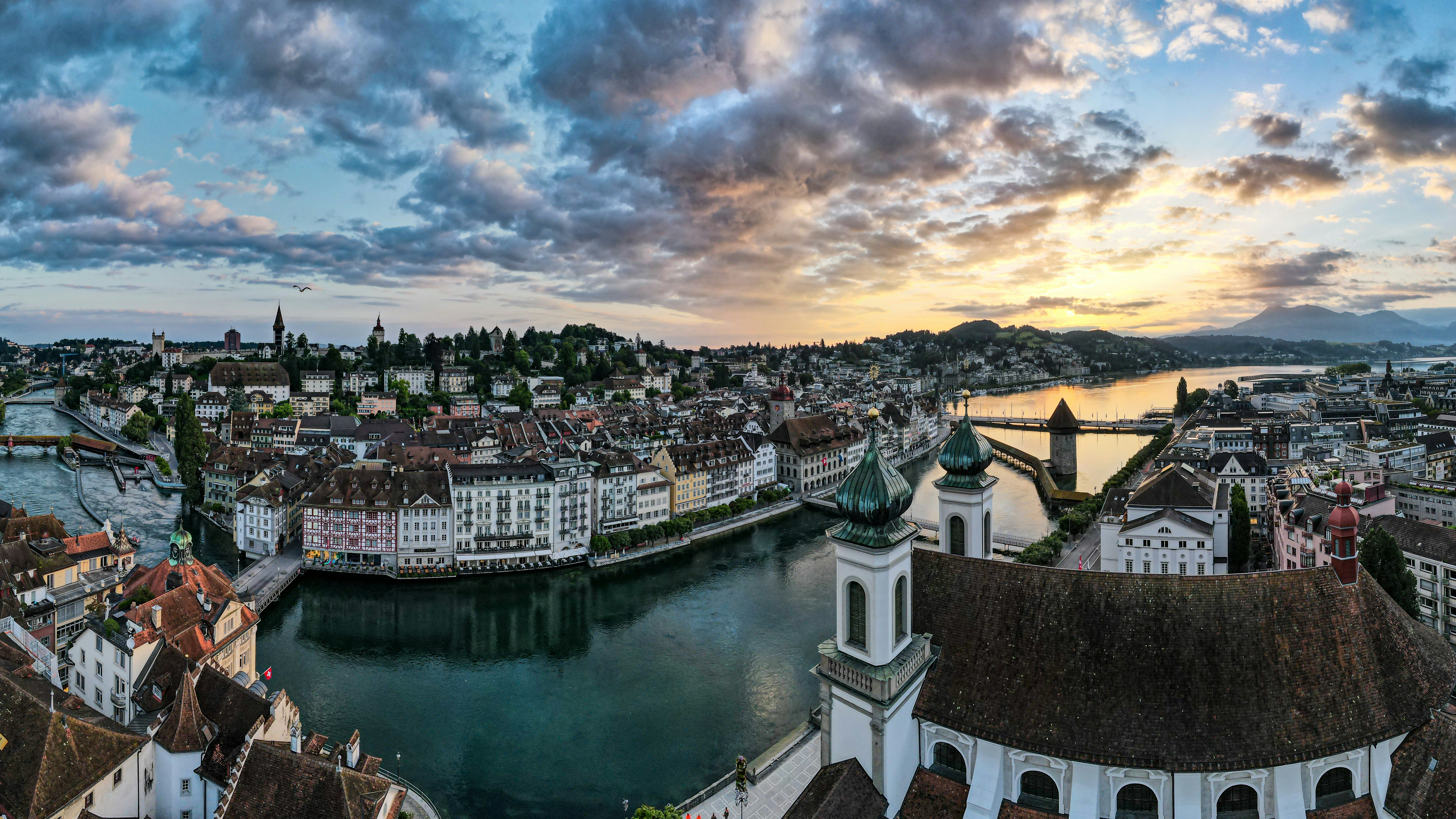
Lucerne, locally known as Luzern, is the gateway to central Switzerland. Embedded within an impressive mountain panorama, this city serves as a perfect capsule of Swiss heritage. Whether you are a history enthusiast seeking medieval fortifications, a nature lover looking to cruise across sapphire waters, or a thrill-seeker aiming to conquer majestic alpine peaks, Lucerne delivers an unforgettable travel experience. In this complete, long-form travel guide, we break down exactly how to experience Lucerne like a local, covering its historical roots, natural wonders, and mountain excursions.
The Historic Landmarks of Lucerne
Walking through Lucerne feels like stepping directly into a living history book. The city is highly pedestrian-friendly, meaning you can easily explore its primary historic sites on foot within a single day. The undisputed symbol of Lucerne is the Chapel Bridge (Kapellbrücke). Constructed originally in the 14th century, it is recognized as the oldest covered wooden bridge in Europe. As you walk across this historic structure, look up to see the fascinating 17th-century triangular paintings that depict scenes from Lucerne's regional history. Right next to the bridge stands the octagonal Water Tower, which has historically served as a prison, a treasury, and an archive.
A short walk uphill from the old town brings you to the Musegg Wall (Museggmauer). This medieval defensive wall has stood intact since the 14th century. Visitors can walk along parts of the ramparts and climb up three of the historic towers—Männli, Zyt, and Schirmer—for a breathtaking panoramic view over the rooftops of Lucerne. The Zyt tower houses the oldest clock in the city, built in 1385, which possesses the special privilege of striking the hour exactly one minute before all other city clocks.
Another deeply emotional stop is the Lion Monument (Löwendenkmal). Carved directly into a sandstone cliff face, this massive sculpture depicts a dying lion. It was designed by Bertel Thorvaldsen to honor the Swiss Guards who lost their lives during the French Revolution in 1792. Mark Twain famously described this monument as "the most mournful and moving piece of stone in the world."
Cruising the Pristine Waters of Lake Lucerne
You cannot truly say you have experienced Lucerne without spending time on its magnificent lake. Lake Lucerne is unique because of its irregular, fjord-like shape, which twists around massive mountain bends. This creates stunning landscapes that shift dramatically with every turn of the boat.
For a highly authentic experience, book a journey on one of the historic paddle-wheel steamers operated by the local navigation company (SGV). These beautifully restored vintage steamships offer regular lake cruises that connect Lucerne with various lakeside villages. If you hold a Swiss Travel Pass, these standard lake boat cruises are fully covered, allowing you to simply hop on and enjoy the mountain fresh air without buying an extra ticket. For budget travelers, taking a 1-hour panoramic yacht cruise or using the public boat to reach Weggis or Vitznau is a fantastic way to experience the water affordably.
The Mount Pilatus Day Trip: The Golden Round Trip
Mount Pilatus rises dramatically above Lucerne at 2,132 meters, casting an iconic shadow over the region. Local folklore long asserted that dragons with healing powers lived on its slopes, and today, it stands as one of the ultimate mountain excursions in central Switzerland.
To experience Pilatus perfectly, we highly recommend embarking on the famous "Golden Round Trip". This seamless route combines multiple modes of transport into one massive adventure:
- Step 1: Take a relaxing boat cruise from Lucerne across the lake to Alpnachstad.
- Step 2: Board the historic cogwheel railway from Alpnachstad to the top of Pilatus. This is the steepest cogwheel railway in the world, climbing gradients of up to 48%.
- Step 3: Enjoy the summit! Walk along the dragon paths, look out at the 73 alpine peaks visible on clear days, and enjoy lunch at the panoramic restaurant.
- Step 4: Descend down the opposite side of the mountain via the "Dragon Ride" aerial cableway and panorama gondolas down to Kriens.
- Step 5: Take a quick 15-minute local bus ride from Kriens back to the center of Lucerne.
Essential Practical Tips for Lucerne Visitors
To maximize your travel budget and enjoy a smooth journey, keep these professional tips in mind. First, if you stay overnight at any registered accommodation within the city, you will receive a free Lucerne Visitor Card. This card grants you completely free travel on all local buses and trains within the city zone, alongside valuable discounts for local museums and cable cars.
When it comes to dining, restaurants in the old town can be quite expensive. To save money, consider visiting the food halls of the local department stores or grab fresh local cheeses, bread, and fruits from the weekly farmers' market, which takes place every Tuesday and Saturday morning along the banks of the Reuss River. Pack a reusable water bottle because the public fountains scattered across Lucerne provide high-quality, cold mineral water sourced directly from the surrounding mountains entirely for free.