We select these recommendations based on real field testing. If you purchase via our retail links, we may earn a small affiliate commission at no extra cost to you.
Hiking through the towering peaks of the Swiss Alps is a deeply transformative experience. From the emerald green pastures of Lauterbrunnen to the rugged, high-altitude rock paths framing the iconic Matterhorn, Switzerland possesses some of the finest trail networks on Earth.
However, mountain weather in the Alps is notoriously unpredictable. A perfectly sunny morning with clear blue skies can easily transform into a freezing rainstorm or blinding mountain mist within thirty minutes. Packing standard casual clothes simply will not cut it when tackling steep limestone slopes. Staying comfortable, warm, and secure on high-altitude terrains requires an optimized, technically accurate layering strategy and proper gear choices. This comprehensive guide highlights the absolute non-negotiables you must bring along.
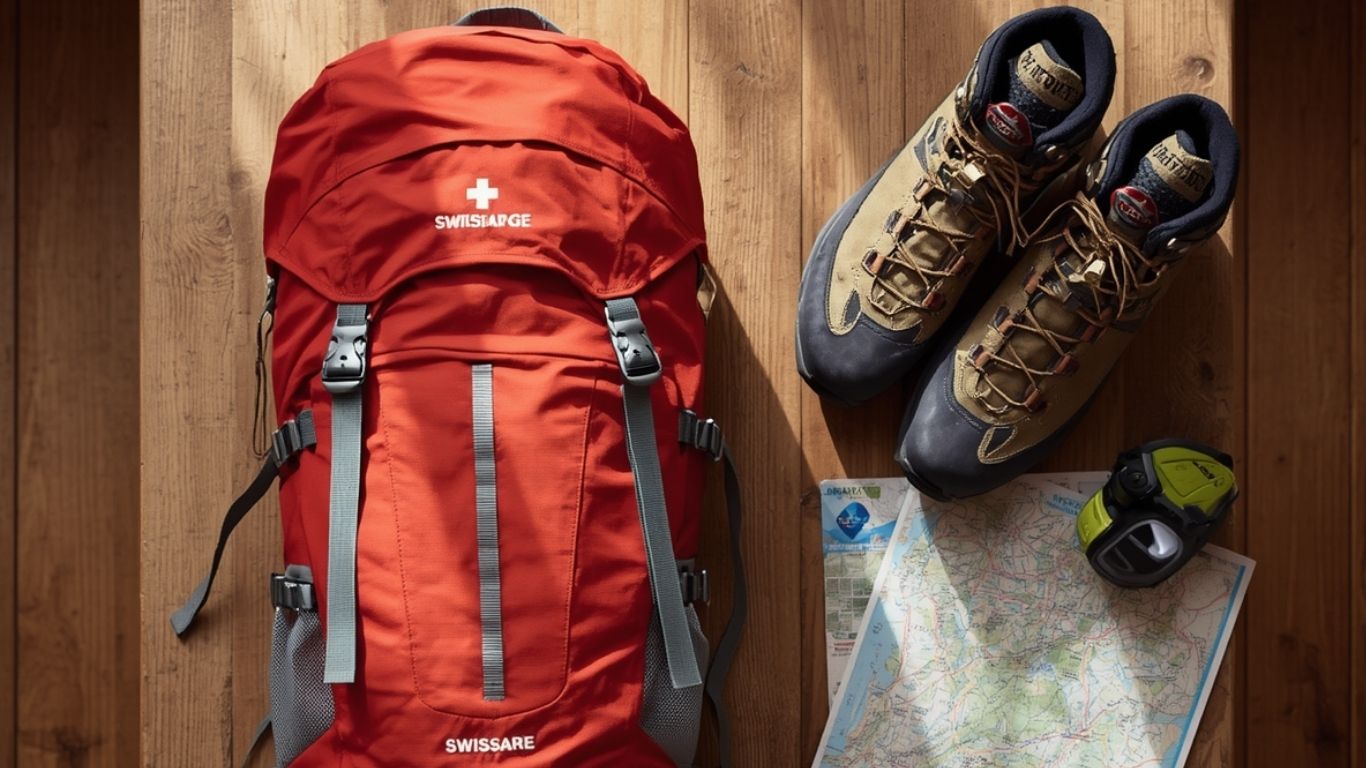
Table of Contents
Quick Summary
The baseline requirement for a safe Swiss hike includes sturdy mid-ankle boots with deep rubber lugs, a strict three-layer technical clothing system (moisture-wicking base, insulating mid-layer, and waterproof outer shell), and offline trail maps. Avoid cotton completely and use carbon trekking poles to save your knees on long descents.
Footwear: Rugged Ankle Protection is Mandatory
Your shoes are your single most crucial point of contact with the mountain. Standard running sneakers lack the rigid sole architecture needed to step over loose gravel or slippery slate stone slopes safely.
For day hikes along well-maintained trails, a lightweight yet sturdy mid-ankle hiking boot with deep Vibram rubber lugs is highly recommended. Ensure your boots feature a reliable waterproof breathable membrane (like Gore-Tex) to keep your feet perfectly dry when crossing cold glacier streams or unexpected early-summer snow patches.
The Golden Rule: The Three-Layer System
To combat dramatic shifts in mountain temperatures, alpine professionals rely strictly on a technical three-layer clothing system instead of packing one massive, heavy winter coat:
- The Base Layer: A moisture-wicking synthetic or Merino wool shirt that pulls sweat away from your skin to prevent chills. (Never wear cotton!)
- The Mid Layer: An insulating fleece jacket or lightweight down puffer jacket that locks in your natural body heat.
- The Outer Shell: A premium windproof and waterproof hardshell jacket designed to shield you completely from harsh alpine gusts and downpours.
Trekking Poles & Daypacks
Do not underestimate the vertical scale of the Swiss Alps. Descending a steep 1,000-meter drop down toward a valley floor places intense, punishing pressure directly onto your knees and ankles.
A pair of lightweight, collapsible carbon-fiber trekking poles will drastically reduce joint fatigue and provide invaluable balance when navigating narrow ridge paths. Pair these with an ergonomic 20L to 30L daypack featuring a supportive hip belt to distribute your gear weight evenly across your torso.
Navigation Tools & Alpine Safety Secrets
While Swiss hiking trails are marked beautifully with iconic yellow signposts and red-and-white painted trail markers on trailside rocks, cloud cover can roll in rapidly, dropping visibility down to mere meters.
Never rely purely on your phone's live cell connection, as deep mountain rock walls frequently block signals. Download your desired regional trail topography maps completely offline via specialized apps like SwitzerlandMobility or AllTrails before starting out. Always carry a secondary high-capacity portable power bank to ensure your primary tracking device stays alive in cold weather zones.
Layering Fabrics Comparison Table
Choosing the right fabric blends can mean the difference between a safe mountain crossing and an early signs of hypothermia. Use this matrix to select your trail kit materials:
| Fabric Material | Best Used For | Moisture Management | Drying Speed |
|---|---|---|---|
| Merino Wool | Next-to-skin Base Layer | Excellent (Odor Resistant) | Moderate |
| Polyester / Nylon Synthetics | High-Exertion Base & Mid Layers | Very Good (Wicks quickly) | Ultra-Fast |
| Cotton | Casual wear only (Avoid on trail) | Poor (Holds moisture) | Extremely Slow |
Pros and Cons of Technical Mountain Gear
What We Like
- Technical fabrics offer lightweight packing and high warmth-to-weight ratios.
- Waterproof membranes guard against sudden, unexpected mountain storms.
- Rigid sole architecture reduces the likelihood of painful rolled ankles.
What to Keep in Mind
- Premium outdoor clothing brands require a significant upfront financial cost.
- Technical boots require a brief break-in period before executing long miles.
- Over-reliance on digital phone mapping tools leaves you vulnerable if devices freeze.
Practical Tips for Different Travel Styles
- For Casual Walkers: If you stick entirely to flat valley walks like the Lauterbrunnen loop, low-cut trail shoes with decent tread will work fine instead of heavy high-cut boots.
- For Hut-to-Hut Trekkers: Space is premium. Limit your kit to two pairs of high-quality Merino wool socks, alternating and washing them at overnight alpine huts.
- Seasonal Advice: Early summer hikes (June to early July) often cross high snowfields. Toss a pair of compact traction microspikes into your pack base to prevent slipping on hard ice patches.
Equip Your Next Alpine Adventure Right
Stepping out onto high-altitude Swiss trails unprepared can be incredibly risky. To explore our meticulously curated list of premium trail footwear, lightweight clothing layers, and mountain packs reviewed by our team, browse through our official Swiss Vista Gear Shop. Alternatively, dive straight into Amazon to order rugged carbon trekking poles, waterproof shell layers, and compact first-aid safety kits to guarantee you stay safe under any alpine conditions.
Common Mistakes to Avoid
- Wearing 100% Cotton Base T-Shirts: Cotton absorbs water like a sponge and stays wet for hours. When a cool mountain wind hits your wet shirt, your body temperature will plummet.
- Using Brand New Boots on a Long Hike: Never unbox stiff leather boots on the morning of a grueling 15-kilometer mountain pass trek. Break them in at home first to avoid painful trail blisters.
- Disregarding Local Weather Warning Signs: If a local mountain guide or cable car operator tells you a thunderstorm is moving into the upper valley, alter your plans immediately. Rocky ridgelines offer zero lightning cover.
Frequently Asked Questions
Can I use regular gym sneakers for hiking in the Swiss Alps?
For paved or completely flat valley floor paths, gym shoes are acceptable. However, for any trail featuring red-and-white alpine markers, sneakers do not provide the necessary sole grip or ankle stability required for safety.
Is it safe to drink water directly from Swiss mountain streams?
Even though high alpine streams appear crystal clear, upstream alpine pastures often host grazing dairy cows. It is always best to use a lightweight backpacking water filter or purification tablets to ensure safety.
How heavy should my daily mountain daypack be?
For a standard day hike, your pack should ideally weigh under 5 to 7 kilograms. Keep it light by packing only your layering system, a small first-aid kit, 2 liters of water, energy snacks, and your offline map device.
What do the red-and-white painted trail stripes mean?
In Switzerland, red-and-white painted indicators on rocks and trees signify an official mountain trail. These paths are often steep, narrow, and rocky, requiring proper footwear and basic mountain awareness.
Should I carry a physical map if I have a premium smartphone GPS app?
Yes. Smartphones can easily run out of battery, experience water damage during downpours, or suffer system errors in freezing weather. Carrying a lightweight, waterproof topographical paper map is a highly reliable backup safety habit.
Are trekking poles really necessary for hiking down mountains?
While not strictly mandatory, trekking poles reduce the impact on your knee joints by roughly 20 to 25 percent during steep, continuous downhills. They also provide key balance points when crossing unstable gravel slips.
What should I do if a sudden heavy fog rolls in on a rocky path?
Stop moving forward if you lose sight of the next red-and-white trail marker. Sit tight, pull on your technical windproof outer shell layer to retain core warmth, and consult your offline GPS application to check your exact positioning.
Do I need to carry a heavy tent and sleeping bag for multi-day hikes?
No. Switzerland has an exceptional network of mountain huts (SAC huts) that provide comfortable beds, warm blankets, and hearty hot meals. You only need to carry a lightweight silk liner sheet and your basic personal clothing layers.
Final Verdict
Investing in proper, high-quality mountain gear isn't just about ensuring your physical comfort—it is a vital safety insurance policy when exploring mother nature at high altitudes. By relying on a versatile technical layering setup, carrying reliable navigation maps, and lacing up rugged mid-ankle boots, you will handle the trails seamlessly. Double-check your pack list, prepare your route sheets, and head out to experience the stunning beauty of Switzerland.
Expand Your Swiss Travel Planning
- Swiss Alpine Club (SAC) Backcountry Route Classification Framework System
- Federal Office of Topography (swisstopo) Alpine Network Mapping Data Protocols